Many
of those who care about finding solutions to the physical distress that
our climate is experiencing, as reported on this week in a landmark
1,300 page report by the IPCC‘s Sixth Assessment Working Group 1 (Climate Change 2021: The Physical Science Basis), are not looking at Wyoming.
But based upon the announcement made
in early June by Wyoming Governor Mark Gordon, together with senior
Senator John Barrasso, Secretary of Energy Jennifer Granholm, TerraPower
founder and Chairman, Bill Gates, President and CEO of Rocky Mountain
Power Gary Hoogevene and others, maybe they should.
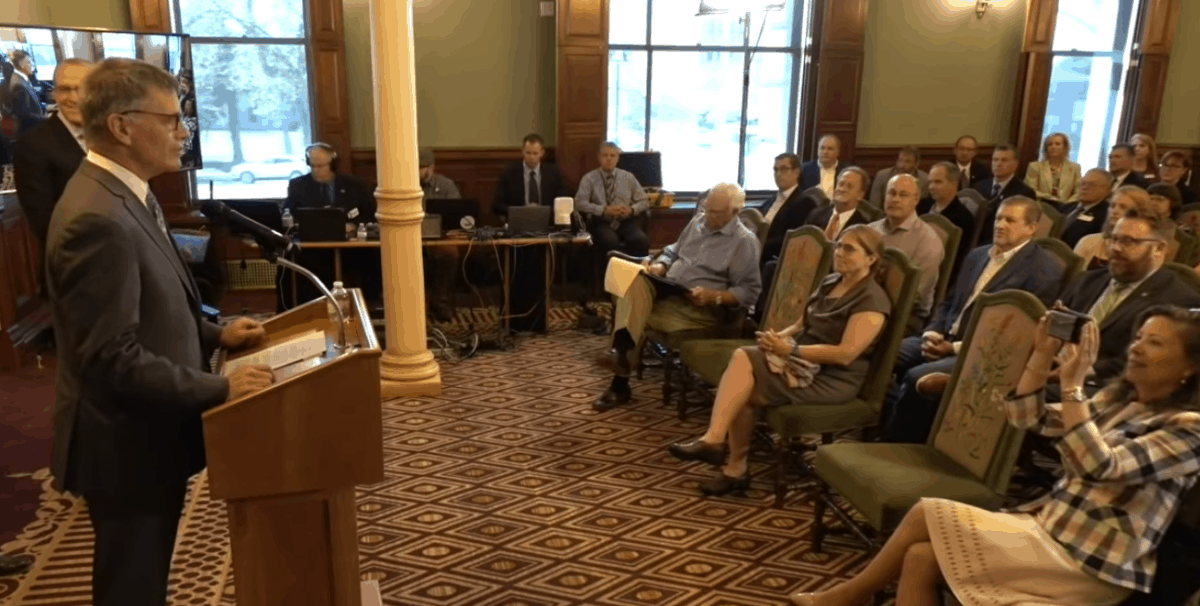
In a well-orchestrated 30-minute event,
Wyoming’s political leadership, while making no bones about their total
support for coal, announced that Bill Gates’ advanced nuclear venture,
TerraPower, had selected Wyoming and a yet-to-be-determined retiring
Rocky Mountain Power coal plant, as the site to build and operate the
first sodium-cooled advanced Natrium™ reactor, with matching funding from the DOE’s ARDP program.
Additionally,
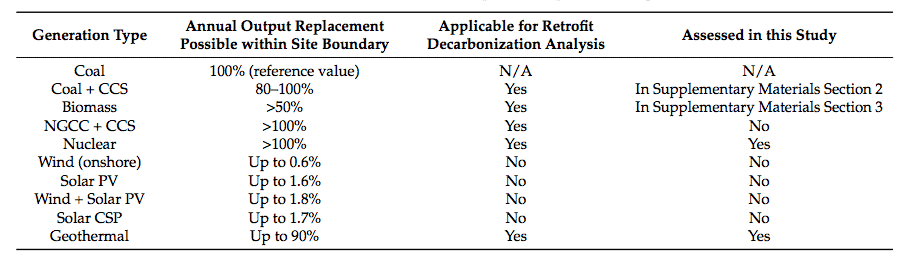
converting to nuclear can maintain the level of energy output from the
plant and even exceed it, while eliminating emissions. In contrast,
annual output replacement would not be possible using other clean energy
options such as biomass, wind, solar or geothermal. (See Qvist p. 11)
In October, 2020, the U.S. Department of Energy (DOE), awarded TerraPower $80 million in initial funding
from the Advanced Reactor Demonstration Program (ARDP) to demonstrate
the Natrium reactor and energy system with its technology co-developer
GE Hitachi Nuclear Energy (GEH) and engineering and construction partner
Bechtel. The award will provide TerraPower and its partners with up to $1.6 billion in federal funding during the project to build the reactor,
to be operational within five to seven years. TerraPower is also
partnering with PacifiCorp and Rocky Mountain Power, subsidiaries of
Berkshire Hathaway Energy, Energy Northwest and Duke Energy, which will
also provide expertise in the areas of licensing, operations,
maintenance, siting and grid needs.
Currently, the DOE is funding
a number of promising reactor development projects and President
Biden’s recently passed Infrastructure Bill appears to have increased
those budget allocations. That is very good news for the climate.
According to the Qvist study, some 1,300 GW of coal power units globally
could be suitable for retrofitting with advanced nuclear reactors by
the 2030s. If large-scale retrofitting were to be implemented starting
then, up to 200 billion tons of CO2 emission could be avoided, which equates to nearly six years of total global CO2 emissions, and “would make the prospects of reaching global climate targets far more realistic.” (Qvist p. 33)
For
those of us anxiously logging milestones along the way towards our
future 100% clean grid, TerraPower’s decision to site its new plant in
Wyoming and Wyoming’s embrace of this opportunity—where not that long
ago the legislature reacted with an “‘unheard of’ IRP investigation” to
push back on PacifiCorp’s 2020 IRP showing the retirement of 20 of 24
coal plants—is remarkable. It is definitely worthwhile keeping an eye
on Wyoming, where some entirely miraculous brew of audacious political
leadership, climate-fueled economic anxiety and job-seeking
technological brinkmanship appears to have paved the way for Wyoming to
become a birthplace of 21 century clean energy. As Governor Gordon
said, this is truly “game-changing and monumental” news—not just for
Wyoming but also for the world.
Aside: Several times during the presentation, a speaker mentioned their interest in carbon capture and sequestration. Many of the technologies being pursued for that capability require nearly continuous clean power in massive quantities. Nuclear plants are the leading source for that kind of power. End Aside
The Governor’s plan to test the conversion of coal plants to new nuclear is being supported with a combination of private and federal funding as well as advance work by Wyoming’s legislature, which passed HB 74 with overwhelming bipartisan support, allowing utilities and other power plant owners to replace retiring coal and natural gas electric generation plants with small modular nuclear reactors (SMRs). The bill was signed by the Governor immediately and is now House Enrolled Act 60.
Wyoming will see the development of a first-of-a-kind advanced nuclear power plant that validates the design, construction and operational features of the Natrium technology and enables Wyoming, which currently leads the country in coal exports, to get a lead in the form of energy best suited to replace coal—built right at coal plants, potentially around the world. This conversion path not only reuses some of the physical infrastructure at the coal plant but also takes advantage of the skilled people and supporting community that have been operating that plant.
In December, 2020, Staffan Qvist, Paweł Gładysz, Łukasz Bartela and
Anna Sowizdzał published a study that looked at the issue of
retrofitting coal power plants for decarbonization in Poland. They
published their findings in Retrofit Decarbonization of Coal Power Plants—a Case Study for Poland, showing that decarbonization retrofits worked best using high-temperature small modular reactor to replace coal boilers.
What
makes this announcement truly “game-changing and monumental” in the
Governor’s own words, is just how cost-effective and efficient
converting a coal plant to advanced nuclear might be. According to the
Polish study, retrofitting coal boilers with high-temperature small
modular nuclear reactors as a way to decarbonize the plant can lower
upfront capital costs by as much as 35% and reduce the levelized cost of
electricity by as much as 28% when compared to a greenfield
installation.
The analysis looked at the potential within a coal
retrofit of re-using the existing assets that are already there. While
there will be large differences across plants as to the effective age
and useful life condition of major plant components, the study found
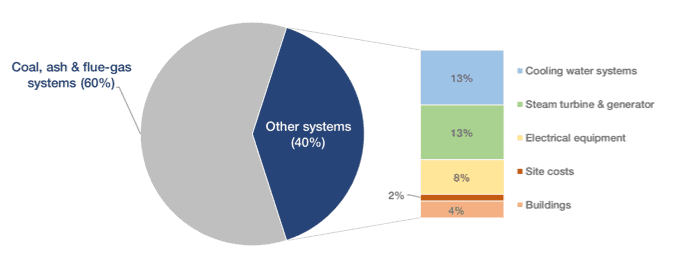
that “compared to very early retirement, re-using non-coal-related
auxiliary buildings and electrical equipment, turbogenerators, cooling
water systems, cooling towers, and pumphouses can thus avoid the
stranding of up to 40% of the initial investment at a new coal plant.”
(See Qvist p. 7)